Posted on Leave a comment

Hemp Seed Oil for Skin: What the Wellness Industry Got Wrong

Hemp seed oil surrounded by hemp seeds with hemp seed oil on the back hand, a few drops of oil showing on the skin

Hemp Seed Oil for Skin: What the Wellness Industry Got Wrong

And why it matters now

There is an ingredient that dermatologists and cosmetic scientists have studied quietly and thoroughly for decades.

It has one of the most precisely matched fatty acid profiles for human skin of any plant oil in existence.

Its chemistry addresses some of the most common skin complaints that accompany hormonal change — dryness, sensitivity, compromised barrier function, the loss of suppleness that no amount of ordinary moisturiser seems to fix.

The wellness industry spent years selling it short. Some dismissed it as too niche. Others treated it as interchangeable with any other natural oil.

Some avoided it entirely, confused by the name.

All of them missed the point.

Coconut halves on a dark background

Here is what hemp seed oil actually does — and why, if you have dry, sensitive, or maturing skin, it may be the most useful ingredient you haven’t taken seriously enough.

Hemp Hearts for hemp seed oil, on a wooden spoon

What Hemp Seed Oil Is

Hemp seed oil is cold-pressed from the seeds of the hemp plant 

The same plant used for rope, textiles, and food for thousands of years. The seeds. Not the leaves, not the flowers — the seeds.

This distinction matters, because the seed’s nutritional profile is entirely different from any other part of the plant.

The oil is food-grade. It appears in salad dressings, smoothies, and nutritional supplements worldwide. It is regulated as a cosmetic ingredient across the EU and UK, with a long and well-documented safety record.

What makes it interesting for skin is not where it comes from. It’s what’s inside.

That fatty acid composition is the whole story. And it’s the part the wellness industry almost never explained.

The Chemistry That Actually Matters

Every plant oil has a fatty acid profile — a fingerprint of the different fats it contains. That profile determines what an oil will and won’t do for your skin.

Hemp seed oil’s profile is, to put it plainly, unusual. Here is why it stands out.

1. It is exceptionally high in linoleic acid (omega-6)

Hemp seed oil contains approximately 55–60% linoleic acid — a notably high concentration, significantly higher than many popular oils including olive, argan, and coconut.

This omega-6 is the fatty acid your skin depends on to build and maintain its outer barrier. It is a structural component of ceramides — the lipid molecules that hold the cells of your outer skin layer together, regulate moisture retention, and protect against environmental damage.

Your skin cannot manufacture it. It must come from outside. And when levels are low — through diet, age, or hormonal change — the consequences are visible: dryness, sensitivity, reactive skin, a tight, uncomfortable feeling that water alone never seems to fix.

2. It contains GLA — a rare anti-inflammatory fatty acid

Hemp seed oil also contains gamma-linolenic acid (GLA), with well-documented anti-inflammatory properties.

At around 2–4% of the oil’s composition it is a small fraction — but it is the kind of compound that earns its place in a formulation rather than simply appearing as a marketing credential, particularly in skin prone to redness or reactivity.

GLA is found naturally in relatively few plant oils. It supports skin elasticity, helps calm reactive skin, and plays a role in maintaining suppleness over time.

3. Its omega ratio is one of the most balanced of any plant oil

Hemp seed oil contains both omega-3 and omega-6 fatty acids in a ratio close to 3:1 — which mirrors the ratio considered optimal for human skin biology.

This is not a coincidence of branding. It is chemistry. And it helps explain why the oil works in harmony with the skin’s own processes rather than disrupting them.

Research confirms linoleic acid’s essential role in maintaining the skin’s outer barrier

The Skin Barrier — What It Is and Why It Breaks Down

Your skin’s outer layer is not simply dead surface cells waiting to be exfoliated. It is an active, complex structure.

Think of it as a brick wall. The bricks are skin cells. The mortar binding them together is a matrix of lipids: primarily ceramides, cholesterol, and free fatty acids.

That mortar exists in precise proportions. Disrupting it — through hormonal change, over-cleansing, or the wrong ingredients — leads to moisture escaping through a compromised outer layer. Scientists call this trans epidermal water loss.

When the barrier is compromised, moisture escapes. External irritants get in. Skin becomes reactive, tight, sensitised. It stops behaving the way it used to.

This is not merely an aesthetic concern. Barrier function is fundamental to skin health.

And it is precisely the kind of problem that omega-6-rich oils are structured to address.

What Hormonal Change Does to Skin

The Biology Nobody Explains Properly – Through perimenopause and beyond, several things happen to skin simultaneously.

Oestrogen declines. Oestrogen plays a direct role in ceramide production, collagen synthesis, and the skin’s ability to retain moisture.

As it falls, ceramide levels fall with it. The lipid mortar in the skin’s barrier thins. Skin becomes drier, less elastic, more reactive.

Sebum production decreases. The skin’s natural surface oil — which forms part of its surface protection — slows significantly.

Skin that was once balanced or slightly oily may become chronically dry.

The skin thins. Cell turnover slows. The barrier becomes less efficient at self-repair.

These changes happen gradually. Many people find that products that worked perfectly well in earlier years — cleansers, moisturisers, even water applied too frequently — start to feel harsh or stripping on skin that has less capacity to recover.

This is not imagined. It is biology.

And it explains why an omega-6-rich, barrier-supportive oil is not an optional extra at this life stage. It is, in many ways, a logical response to what the skin is actually asking for.

Not All Oils Are Equal — The Mistake Most People Make

Here is where the wellness industry has done real damage through oversimplification.

For years, “natural oil” was treated as a single category. If it came from a plant, it was considered broadly similar — good, moisturising, natural. The specific chemistry of each oil was rarely explained. People rotated between coconut, olive, argan, and hemp seed oil as if they were variations on a theme.

They are not.

Oils fall broadly into two groups based on their dominant fatty acid: high-oleic oils and high-linoleic oils.

Oleic-dominant oils — olive oil being the most familiar — are occlusive. They sit on the surface of skin and reduce moisture loss. For certain skin types and purposes, that is exactly what’s needed.

But research has found that repeated topical application of high-oleic oils can, over time, disrupt the skin barrier in some people — particularly those with sensitive or compromised skin. While moisturising in the short term, they can alter the lipid structure of the outer skin layer in ways that actually increase moisture loss.

High omega-6 oils work differently. They provide the structural building blocks the barrier needs to repair and maintain itself. For dry, mature, or reactive skin — the skin that struggles most — this distinction is not minor. It is the difference between an oil that temporarily soothes and one that helps the skin do its job better.

Hemp seed oil is one of the highest omega-6 plant oils available. That is not a wellness talking point. It is measurable chemistry with a well-documented mechanism of action.

A Note on Texture — Why Hemp Seed Oil Feels Different

The most persistent misunderstanding about hemp seed oil is that it’s heavy or greasy.

This almost certainly stems from confusion with oleic-dominant oils — olive oil being the obvious example — which are heavier, slower to absorb, and have a more occlusive feel on skin.

Omega-6-rich oils behave quite differently. They’re lighter, they absorb more readily, and they leave skin feeling comfortable rather than coated.

Hemp seed oil is also considered non-comedogenic — unlikely to block pores — making it suitable for a wide range of skin types, including those who would usually avoid facial or body oils.

If you’ve tried plant-based oils and found them too heavy, you may simply have been using the wrong oil for your skin type.

Hemp seed oil is one of the options most likely to change your experience of what a plant oil can feel like.

Golden Hemp Seed Oil in pipette

The Misconceptions Worth Clearing Up

“It needs to be consumed internally to benefit the skin.”

Both internal and topical application have been studied.

Applying the oil topically delivers linoleic acid directly to the outer skin layer — exactly where the barrier lipids are located.

You do not need to eat it for your skin to benefit. That said, it is also one of the better dietary oils for skin health, which is why you will find it in food as readily as in cosmetics.

“It’s a trend ingredient.”

The research on hemp seed oil in cosmetic and nutritional applications goes back decades.

This is not a recent discovery that wellness marketing turned into something momentarily fashionable. The science existed long before the trend did.

Hemp Seed Oil and Intimate Skin

Intimate skin is thinner, more permeable, and more sensitive to formulation than general body skin. It shares the same barrier biology — and, for people navigating hormonal change, experiences many of the same challenges: dryness, sensitivity, reduced elasticity, a loss of the natural comfort that was once simply taken for granted.

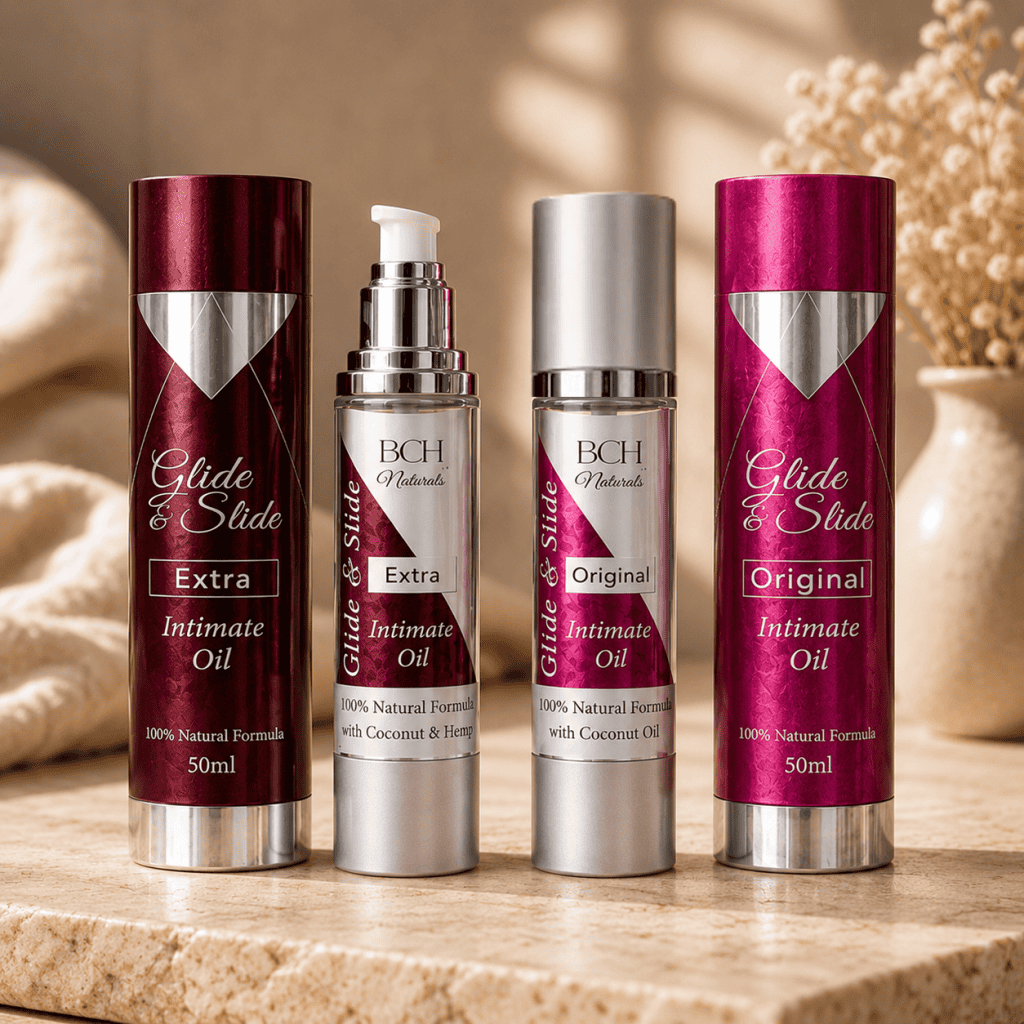
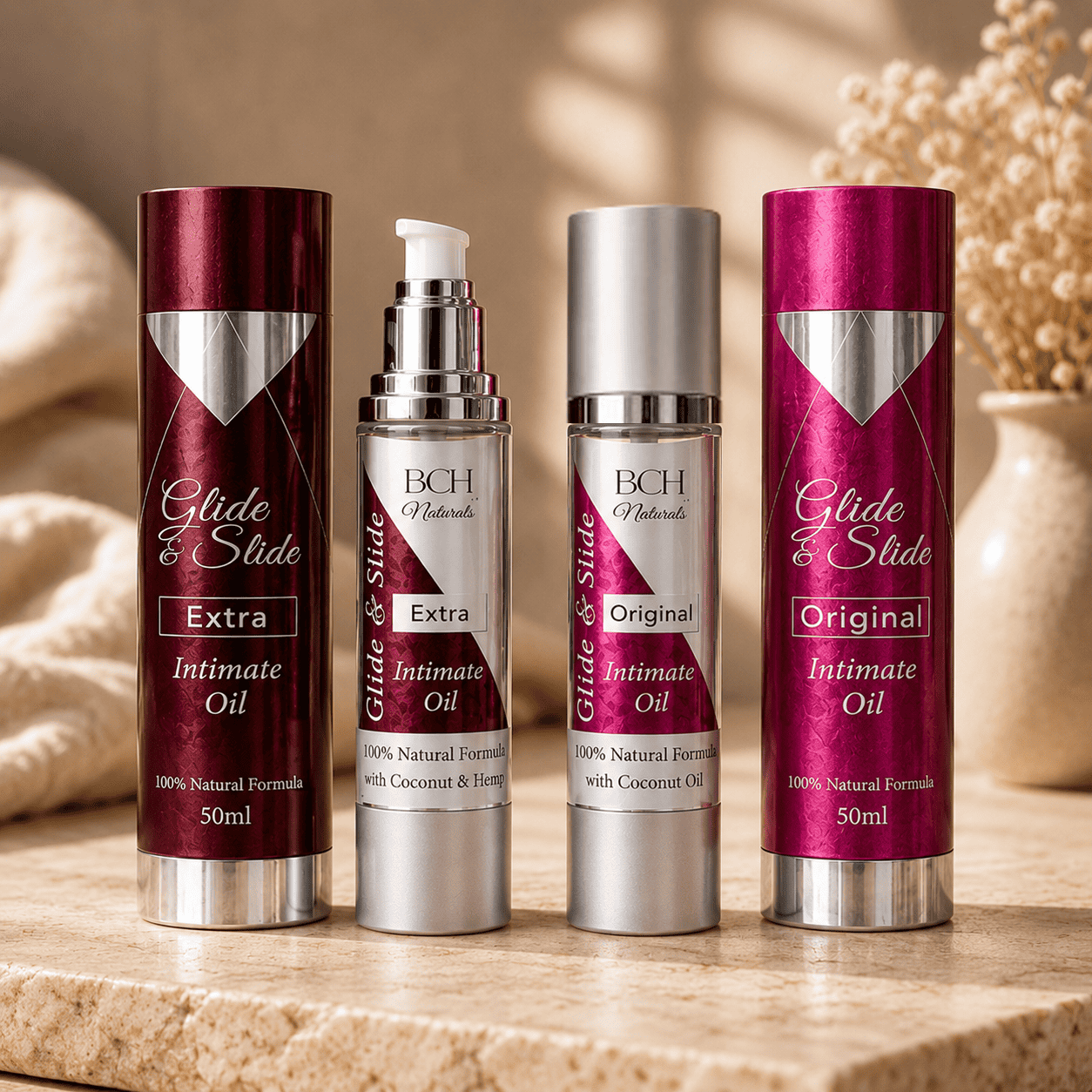
This is why Glide & Slide Extra pairs hemp seed oil with coconut oil.

These two oils are not interchangeable. They are complementary. Coconut oil is dominant in lauric acid — a deeply moisturising, antimicrobial fatty acid that works differently in the skin’s structure. Hemp seed oil contributes the omega-6 and GLA content that coconut oil does not provide.

Together, they do what neither does alone: immediate conditioning alongside structural support.

Not because the combination sounded appealing on a label, but because the chemistry makes it logical.


Glide & Slide Extra is a 100% natural, vegan pleasure oil combining cold-pressed coconut oil and hemp seed oil. Registered UK cosmetic product. Made in Britain.

The Bottom Line

Hemp seed oil is not having a moment. It is not a superfood concept repurposed for a wellness trend.

It is an oil with a well-studied fatty acid profile that happens to align with what human skin needs — particularly during and after the hormonal shifts that come with midlife.

The wellness industry underestimated it by treating it as one ingredient among many, roughly equivalent to whichever oil happened to be fashionable that year.

The research tells a more specific story. Now you have the real version.

If your skin has been asking for something it isn’t getting from the products you’ve always relied on, it may be worth paying attention to the chemistry rather than the marketing.

Your skin barrier is not a cosmetic concern. It is the foundation of everything.


Know someone who prefers things natural? This one’s worth sharing.

Posted on

How to Support Your Partner Through Menopause — BCH Naturals

Couple holding hands in support

Menopause: A Plain-English Guide for the Person Who Loves Her

You don't need to understand Everything. You just need to know enough.

Nobody gave men a handbook on how to support their partner through menopause.

You watched something shift in the person you know best — maybe her sleep, her mood, her comfort in her own skin — and you’ve been navigating it on instinct ever since.

This isn’t a handbook either. It’s better. It’s honest, plain-speaking, and written for someone who cares enough to want to understand — without being lectured.

Because the truth is: menopause isn’t something that happens to her in isolation. It happens in a relationship. And what you know — and how you respond — matters more than you might think.

man quietly reading

What Is Actually Happening

Menopause isn’t a disease. It’s a transition — the point at which the ovaries wind down production of oestrogen and progesterone, the hormones that have governed her reproductive cycle since puberty.

When those hormones drop, the effects ripple across almost every system in the body. Not all at once. Not in a predictable order. And not the same way for any two women.

Perimenopause — the transition leading up to menopause — can begin 4 to 10 years before periods stop entirely.

That means symptoms can start in the early 40s (occasionally earlier).

Menopause itself is defined as 12 consecutive months without a period.

After that comes post-menopause — when some symptoms ease, and others take their time.

The hormonal shift is real, measurable, and significant. This isn’t mood. This isn’t attitude. This is biology.

What She Might Be Dealing With

Here’s the list no one explains properly — not the clinical version, the real one.

Hot flushes. A sudden wave of heat, often at night, that wakes her from deep sleep multiple times.

Her body’s internal thermostat is genuinely malfunctioning — not exaggerating.

Sleep disruption. Chronic, cumulative, and exhausting. Night sweats alone can fragment sleep for years.

Sleep deprivation affects mood, patience, pain tolerance, and cognitive function.

If she seems shorter with you than usual, this is probably why.


Brain fog. She might lose a word mid-sentence, forget something from yesterday, or feel like her thinking is slower than it should be.

It’s temporary — and frightening when you don’t understand what’s causing it.

Mood changes. Anxiety, low mood, and irritability are hormonal — not personal.

Oestrogen plays a direct role in serotonin regulation. When oestrogen drops, mood follows.

This is not who she is. It’s what her chemistry is doing right now.

Physical changes. Joint aches, dry skin, changes in libido — and one of the least talked-about symptoms — vaginal dryness.

Reduced oestrogen means reduced natural lubrication.

Intimacy that was once comfortable can become painful.This affects her, and it affects the relationship, and it’s worth talking about gently.

How to Support Your Partner Through Menopause: What Actually Helps

This is the part that matters.

Keep the bedroom cool. A fan, lighter bedding, or a cooling pillow on her side of the bed. Small and practical — and genuinely useful at 3am.

Don’t take it personally. When she’s quiet or short, it is almost certainly not about you. The ability to absorb that — calmly, without escalating — is one of the most useful things you can do.

Ask, don’t assume. “What would help right now?” is worth more than any solution you’ve already decided on. Sometimes she wants you to fix it. Sometimes she wants you to sit with her while she can’t.

Move together. Regular exercise helps with hot flushes, mood, and sleep quality. Walking, swimming, cycling — anything consistent, done as company, not prescription.

Watch what you both eat. Alcohol and spicy food are known hot flush triggers. If evening drinks are making her nights worse, adjusting together is easier than asking her to do it alone.

Learn the language. The British Menopause Society offers clear, medically-reviewed guidance written for both partners — worth twenty minutes of your time.

What Doesn't Help

Minimising it. “You seem fine to me” — even well-meant — can feel devastating when she’s running on broken sleep and a body she doesn’t recognise.

Offering solutions when she needs space. Men are wired to fix. Menopause often can’t be fixed in the moment. Sometimes the right move is to stay close and say close and say less.

Making her feel high-maintenance. She isn’t. She’s navigating something significant, often without complaint, often while continuing to work, parent, and hold things together.

Waiting for her to ask. Some women won’t. They’ve spent decades managing quietly. Watch, and offer before she has to.

Can we still be intimate during menopause?

💗 Yes — and for many couples, intimacy during and after menopause deepens rather than diminishes.

 What changes is how you approach it.

Vaginal dryness affects an estimated 50% of postmenopausal women. Left unaddressed, discomfort leads to avoidance, and avoidance leads to distance. The answer isn’t less intimacy. It’s more care.

Plant-based, food-grade oils — like BCH Naturals Glide & Slide — offer gentle, long-lasting lubrication without synthetic chemicals, parabens, or fragrance. They work with the body rather than against it, and they make a thoughtful, practical difference.

Note: natural oils are not compatible with latex condoms. For condom use, choose non-latex alternatives.

If she hasn’t raised this, she may be waiting for you to. Bringing it up — gently, without pressure — tells her you’re paying attention. That matters more than the conversation itself.

couple cosy happy sitting on a sofa

Menopause is a transition — for both of you. It ends. What you build during it doesn’t have to.

What does menopause do to a relationship?

More than most couples expect. And less than they fear — if they face it together 

The couples who come through this phase well share one thing: they talk about it.

Not in crisis, but in ordinary conversation.

“How are you sleeping?”

“Is there anything I can make easier?”

“What do you need more of from me?”

Not complicated. Just consistent.

How long does menopause last?

Perimenopause can last anywhere from 4 to 10 years. Symptoms can continue into postmenopause for several years after periods stop.

There’s no standard timeline. Some women are through it in two years. Others navigate symptoms for a decade.

HRT (hormone replacement therapy) is effective for many women and worth discussing with a GP if she hasn’t already…” 

 — if she hasn’t already, she might appreciate you raising it together rather than alone.

A middle-aged woman sitting across from a female GP in a warm, calm consultation room

There are also natural alternatives to HRT — and as you know, we always recommend nature first.

Healthy Habits — For Both of You

Menopause is a natural moment to recalibrate. The habits that support her tend to be the ones that serve you both.

Sleep. Protect it. Prioritise it. Going to bed at the same time when you can helps more than you’d expect.

Diet. More oily fish, leafy greens, and calcium-rich foods. Less alcohol and caffeine in the evenings — both are known to worsen night symptoms.

Exercise. 30 minutes of moderate movement most days supports mood, bone density, and cardiovascular health. Do it together when you can.

Skin and touch. Oestrogen loss affects skin hydration and elasticity. A regular natural oil massage — even a brief one — keeps touch comfortable, nourishing, and connected.

It doesn’t have to lead anywhere. Sometimes it’s just care.

Talking. To each other first. To a GP when needed. To a counsellor if things feel stuck. None of that is weakness — it’s maintenance.

If you’re looking for a gentle, natural option to make intimacy more comfortable for her, Glide & Slide is our coconut oil pleasure oil — 100% natural, made in the UK, no synthetics, nothing artificial. A small thing that can make a real difference.

A Few Words to End With

You don’t have to have all the answers. You just have to be present.

The men who navigate this well aren’t the ones who fixed everything. They’re the ones who stayed, listened, and kept showing up — on the ordinary evenings as much as the difficult ones.

That’s not a small thing. In fact, it’s everything.

“Being a good partner during menopause isn’t about knowing what to do. It’s about caring enough to find out.”

Nature does it better. 🌿

Found this useful? Share it with someone who might need it.

Posted on

Valentine’s Gifts for Couples | Calm, Thoughtful Ideas for a Night In

Thoughtful Valentine’s gift wrapped simply with a single red rose for a calm night in

Valentine’s Gifts for Couples Who Prefer a Calm Night In

Valentine’s Day doesn’t have to be loud, expensive, or performative.

The best Valentine’s gifts for couples aren’t found in crowded shops or on a prix fixe menu. They’re found in quiet evenings, unhurried touch, and the kind of closeness that doesn’t need an audience.

More couples are choosing Valentine’s night in ideas that feel genuinely intimate — a massage, soft lighting, and products that support real connection rather than novelty.

At BCH Naturals, our natural intimate oils are one of the most thoughtful Valentine’s gifts for couples who value comfort and closeness. Our Glide & Slide — a 100% natural, coconut oil blend — is perfect for massage, intimacy, or simply slowing down together.

This is a guide for anyone planning a calm Valentine’s night in — and wanting a gift that genuinely feels right.

Couples massage with candles and Intimate Massage Oils

Why More Couples Are Choosing a Valentine’s Night In

Dinner reservations, crowded bars, and fixed menus can turn Valentine’s Day into something oddly stressful.

A night in offers something different:

  • No rushing
  • No noise
  • No comparison
  • No pressure

Instead, couples can focus on what actually matters — presence, touch, and shared time. It’s no surprise that searches for Valentine’s night in ideas continue to rise each year.

Comfort has become romantic.

What Makes a Thoughtful Valentine’s Gift for Couples?

A good Valentine’s gift isn’t about surprise for surprise’s sake. It’s about how it feels.

The most thoughtful Valentine’s gifts for couples tend to share a few things in common:

  • They’re meant to be used together
  • They appeal to the senses
  • They don’t feel awkward or novelty-driven
  • They fit naturally into real life
  • They last longer than one evening

The best gifts don’t shout.
They invite.

Intimate Gifts That Feel Natural, Not Awkward

Intimacy doesn’t need theatrics.

For many couples, the most intimate moments are unhurried and uncomplicated — a massage, shared touch, or simply slowing things down together.

This is why intimate Valentine’s gifts that focus on comfort and connection often feel more meaningful than traditional novelty options. Massage oils and natural intimacy products support closeness without turning intimacy into a performance.

It’s not about doing more.
It’s about feeling more.

Why Simplicity Feels More Intimate

Simple things often land the deepest.

Natural, minimal products — especially those made with skin-loving oils — tend to feel reassuring and familiar. Coconut oil, for example, melts at body temperature and feels comforting rather than clinical, making it a popular choice for couples who value calm, sensual connection.

Choosing a natural, skin-kind gift is also a quiet way of showing care.

It says you’ve thought about comfort, sensitivity, and how the other person will feel — not just in the moment, but afterwards too. For many couples, that kind of consideration feels far more intimate than novelty or surprise. It’s thoughtful without needing explanation.

This is where natural intimacy products truly shine — they remove worry instead of adding it.

Connection doesn’t end with you — it flows between you and your partner. Discover ideas for creating those Valentines moments together in our Couples’ Night In guide.

Ladies on a date night at home cosy on a sofa with glass of white & candles

Turning a Simple Evening into Something Meaningful

A calm Valentine’s night in doesn’t need much:
• Soft lighting
• Phones put away
• A shared intention to slow down
• Touch without expectation
Whether it’s a massage, a long conversation, or simply being close without distraction, the evening becomes less about the date — and more about the connection.
These are the moments people remember.

A Valentine’s Gift You’ll Reach for Again

The problem with many Valentine’s gifts is that they peak on the 14th and disappear by the 15th.

The most appreciated gifts are the ones that:

  • Become part of everyday life
  • Encourage closeness beyond Valentine’s
  • Feel just as right weeks later

There’s something reassuring about a gift that feels chosen with care.

Natural, minimal products don’t try to impress — they quietly say, “I want this to feel good for you.” And for many people, that thoughtfulness is what makes the moment feel truly intimate.

A Calm, Confident Alternative This Valentine’s Day

If you’re looking for Valentine’s gifts for couples that feel thoughtful, intimate, and grounded — not gimmicky or awkward — choosing something simple and skin-kind can make all the difference.

BCH Naturals was created for moments like these: calm evenings, unhurried touch, and intimate massage that feels real.

Research shows that quality time and physical connection are among the most powerful ways to support emotional wellbeing. Mind offers brilliant resources on relationships and mental health if you’d like to explore further.

Because the best Valentine’s gifts aren’t about impressing anyone else.
They’re about how you feel together.

Enjoyed this read? Share it with a friend who’d appreciate a moment of calm and connection.

Posted on

Is Coconut Oil Safe as a Natural Lubricant? Everything You Need to

Midlife man relaxing — natural intimate oil for men — BCH Naturals

Is Coconut Oil Safe to Use as a Natural Lubricant?

If you’ve ever searched “is coconut oil safe as a lubricant?” — you’re in good company.

More people are choosing to rethink what they put on their skin. Clean ingredients matter. Comfort matters. And nobody wants irritation, synthetic chemicals, or products that leave skin feeling worse than before.

This is an honest, straightforward guide — clearly written, no confusing jargon.

Coconut Pleasure Oil made of blend of coconut Oils

Is Coconut Oil Safe to Use as a Natural Lubricant?

In most cases, yes — coconut oil is a safe, comfortable and natural alternative to synthetic lubricants.

Coconut oil is:

✔ Gentle on skin ✔ Naturally moisturising ✔ Long-lasting ✔ Free from preservatives, glycerine and synthetic fragrances ✔ Ideal for sensitive skin ✔ Perfect for slower, more connected intimacy

This is exactly why people search:

  • is coconut oil safe as a lubricant
  • is it safe to use coconut oil as a natural lubricant
  • coconut oil as intimate oil

For most people — yes, it’s safe and wonderful.

Why Many People Prefer Natural Oils for Intimacy

Our bodies change over time — hormones shift, moisture levels change, and many people become more sensitive to synthetic ingredients.

People who choose natural intimate oils tend to prefer products that feel:

  • Calming and skin-kind
  • Pure and minimal
  • Free from synthetic chemicals
  • Genuinely comfortable

Coconut oil melts at body temperature, feels natural, and gives a smooth glide without stickiness or irritation. It supports intimacy at a slower, more intentional pace.

“If you love the natural feel of coconut oil but want something already prepared, clean and ready to use, our coconut-based intimate oil offers the same smooth glide without the guesswork.”

👉 Glide & Slide Original — Natural Coconut Intimate Oil

When Coconut Oil Isn't Recommended

While coconut oil works beautifully for many people, there are a few cases where caution is needed.

❌ Not compatible with latex condoms Oil breaks down latex quickly. If you use condoms for protection, choose a water-based alternative.

❌ Some vaginal pH sensitivities Most people tolerate coconut oil well, but not all. If you’re prone to sensitivity or imbalance, patch-test or start slowly.

❌ Not ideal for most silicone toys Oil can degrade certain silicone materials over time.

If in doubt — use coconut oil externally or for massage first. Your skin will tell you if it loves it.

Is Organic Coconut Oil Any Safer?

Organic coconut oil is usually: ✔ Cold-pressed ✔ Raw or minimally processed ✔ Free from additives

So yes — organic versions are generally cleaner and more skin-loving. BCH Naturals uses food grade organic coconut oil — the purest available. ✅

Want the full breakdown?
👉 Coconut Oil Lube: Benefits & Myths

lady on a beach in a white bikini with a fresh cut open coconut

How Much Should You Use?

A little really does go a long way.
Start with a small amount of two pumps directly in the desired area or in the palm of your hand.

Apply gently
Add more only if needed

Less is always more with natural oils — they’re designed to work with your skin, not against it.

How to Store Coconut Oil for Intimacy

✔ Keep at room temperature
✔ Away from direct sunlight
✔ BCH Naturals Glide & Slide comes in a pump bottle — no scooping, no mess, no waste ✅

lady with no top back to camera looking out of a window on a white bed

Coconut Oil and Comfort During Hormonal Changes

Hormonal shifts can affect moisture levels, skin sensitivity and intimate comfort at any stage of life.

Coconut oil helps by: ✔ Restoring natural moisture ✔ Reducing friction and irritation ✔ Soothing sensitive skin ✔ Supporting comfortable, confident intimacy

This is one of the reasons coconut oil has become such a trusted natural alternative for people experiencing dryness or sensitivity.

How Everyone Can Benefit

Natural intimate oils aren’t just for one person — they’re for everyone.

Coconut oil is wonderful for: ✔ Skin-to-skin massage ✔ Adding comfort and reducing friction ✔ Anyone with skin sensitivity or dryness ✔ Boosting connection in long-term relationships

Natural oils feel skin-kind and grown-up — suitable for everyone who values pure, honest ingredients.

Patch Testing | The Simple Safety Step

Before using any natural product intimately:

✔ Apply a little to the inner arm or thigh ✔ Wait 24 hours ✔ If there’s no irritation, your skin is happy

Simple, sensible and worth doing with any new product. ✅

lady touching her shoulder bare skin

Do you want something natural, gentle and kind on skin?

Coconut oil is one of the simplest, most trusted ways to support comfortable, confident intimacy — without synthetic chemicals, fragrances or irritation.

And that’s exactly why we created BCH Naturals Glide & Slide — 100% natural, skin-kind and long-lasting.

Crafted from pure organic coconut oil. Manufactured in the UK. Designed for comfort, connection and confidence.

Nature does it better.

Enjoyed this read? Share it with friends who love a read.

If you’re looking for a simple, skin-kind option, we’ve created a 100% natural coconut oil blend designed for comfort and glide.

Posted on

Massage Oils for Body & Intimate Skin

At home massage oils and soft cushions for intimate massage

Massage Oils for Body & Intimate Skin

Massage oils aren’t just about relaxation — they’re about comfort, connection, and how your skin responds to touch.

Whether used for full-body coconut oil massage, skin softness, or intimate moments, a good intimate massage oil should work with your body, not against it. Texture, ingredients, and skin compatibility matter — especially for sensitive skin.

This guide explains what to look for in a natural intimate massage oil suitable for both body and intimate skin — and how to choose one that feels right for you.

home spa night candles, towels and stones ready for massage

What Makes a Massage Oil Suitable for Intimate Skin?

Not all massage oils are created equal.

Skin in intimate areas is:

  • more delicate
  • more absorbent
  • more reactive to additives and fragrances

A massage oil suitable for intimate skin should be:

  • free from unnecessary additives
  • gentle on sensitive areas
  • slow-absorbing without feeling sticky
  • compatible with natural skin balance

This is why ingredient choice matters more than branding.

The NHS recommends choosing products free from fragrances and harsh chemicals for sensitive skin areas. Read more at NHS.uk

Ingredient Simplicity Matters

The fewer the ingredients, the easier it is to understand how an oil will behave on your skin.

When choosing a massage oil for body and intimate use, look for:

  • plant-based oils with a long history of topical use
  • no synthetic fragrances
  • no drying alcohols
  • no warming, tingling, or numbing agents

Simple formulations reduce the risk of irritation and allow your skin to respond naturally to touch.

Texture, Glide & Absorption

A good massage oil should:

  • provide enough glide for comfortable massage
  • absorb gradually rather than instantly
  • leave skin feeling nourished, not greasy

For intimate skin, this balance is especially important. Oils that absorb too quickly can feel dry, while overly heavy products can feel uncomfortable.

Many people prefer oils that:

  • feel silky rather than slippery
  • warm naturally on contact
  • remain comfortable over time

When Massage Leads to Intimacy

Massage and intimacy often overlap — and that’s completely natural.

An oil suitable for both body and intimate skin allows for:

  • uninterrupted connection
  • comfort during extended touch
  • a smoother transition from relaxation to closeness

For those looking specifically for intimate lubrication, it’s important to choose a product designed for that purpose.

👉 You can learn more about ingredient safety and intimate-specific considerations in our guide to coconut oil for intimate care.

Choosing the Right Oil for You

There’s no single “best” massage oil — only what works best for your body.

You may want to consider how sensitive your skin is?  Whether you prefer lighter or richer textures? or how you plan to use the oil (massage, skin comfort, intimacy, or all three)?

Some people prefer a classic coconut-based oil, while others enjoy an extra-rich blend designed for extended glide and massage use.

BCH Naturals Glide & Slide is a 100% natural coconut massage oil designed for exactly this — comfortable, skin-kind glide for massage, intimacy, or everyday care.

Manufactured in the UK with organic coconut oil and nothing unnecessary.

Our Approach to Massage Oils

At BCH Naturals, our massage oils are made with:

  • minimal, carefully chosen ingredients
  • a focus on skin comfort and compatibility
  • versatility for both body and intimate skin

If you’re exploring an oil designed specifically for massage with Slide & Glide, our Extra blend is created for that purpose.

Final Thoughts

A Natural Massage Oil You Can Trust

The best intimate massage oils feel comfortable, reassuring and natural on your skin.

Whether used for relaxation, connection, or intimacy — choosing the right oil is about how your body responds, not marketing claims. Simple ingredients, honest formulations, and skin-kind care make all the difference.

At BCH Naturals we keep it simple — pure organic coconut oil, manufactured in the UK, designed for comfort and connection.

Nature does it better. 🌿

Enjoyed this read? Share it with a friend who’d appreciate a moment of calm and connection.

Posted on

Coconut Oil as a Natural Lubricant: Benefits, Myths & Facts

Coconut half, oils

Why So Many People Are Turning to Coconut Oil as a Natural Lubricant

One of the most common questions we hear is: “Can you use coconut oil as a lubricant?”

The short answer: yes — and here’s why so many people love it.

For too long, intimate products meant sticky, scented formulas full of ingredients you’d never put on your face, let alone anywhere intimate.

Now people are choosing products that feel good, do good, and don’t irritate sensitive skin. Coconut oil as a natural lubricant ticks every box.

Coconut halves on a dark background

The Real Benefits of Coconut Oil as a Natural Lubricant

1. It lasts longer than water-based lubricants

People often ask: “Why do people prefer coconut oil over water-based options?”

Because it doesn’t dry out. It melts into the skin, stays silky, and doesn’t need constant topping up.

2. It’s kind to sensitive skin

Pure, cosmetic-grade coconut oil free from additives is gentle and soothing. It’s particularly well suited for anyone who:

  • experiences dryness
  • is peri- or post-menopausal
  • gets irritation from chemical-based lubricants
  • wants something natural and calming

3. No chemicals. No glycerine. No nasties.

The appeal is obvious — coconut oil is simply coconut oil. No preservatives. No artificial fragrance. No hidden irritants.

4. Comfort-restoring moisture

Coconut oil helps restore comfort during intimacy and reduces friction — ideal for anyone who experiences vaginal dryness.

5. Perfect for massage and intimacy

Coconut oil is the ultimate multitasker. Use it for:

  • full-body massage
  • intimacy
  • warm-up and touch
  • moisturising aftercare

It’s a pleasure oil and a massage oil in one bottle.

Myths About Using Coconut Oil as a Natural Lubricant

Myth 1: It’s not safe

Many people Google: “Is coconut oil safe as a lubricant?”

With pure, premium coconut oil, the answer is yes for most people. The only major rule: don’t use it with latex condoms — oil can weaken latex.

Otherwise? It’s gentle, nutritive, and skin-friendly.

Myth 2: Coconut oil causes infections

Pure coconut oil is actually known for its natural antifungal properties — lauric acid, found naturally in coconut oil, has been shown to inhibit candida growth in lab studies.

What’s more likely to cause irritation? Products containing glycerine, synthetic fragrance, preservatives or cheap filler oils — none of which you’ll find in BCH Naturals.

As with any intimate product, everyone’s body is different. If you have a history of sensitivity or recurring infections, we’d always suggest a patch test first and a chat with your GP if you’re unsure.

Myth 3: It’s too heavy

Our coconut oil formula is naturally light, fluid, and feather-soft. It glides smoothly without tackiness — perfect for sensitive skin and effortless intimacy.

The Science Behind Coconut Oil and Vaginal Health

Natural antifungal properties

Coconut oil contains lauric acid, which has been shown in lab studies to inhibit the growth of Candida albicans and other yeast species. This doesn’t mean coconut oil treats yeast infections — but it means it doesn’t feed them the way glycerine-based lubricants can.

Glycerine is essentially sugar — yeast thrive on sugar. Coconut oil contains no sugar, so yeast can’t use it as fuel.

Gentle on the vaginal microbiome

Many commercial lubricants contain glycerine, propylene glycol, parabens, preservatives or synthetic fragrances. These can irritate tissue and disrupt pH balance — which is when good bacteria drop and candida can overgrow.

Pure coconut oil is neutral and gentle on the skin barrier. It doesn’t carry those risks.

Oil-based means yeast can’t multiply in it

Yeast thrive in moist, sugary environments. Coconut oil is oil-based, not water-based, and provides no nutrient source for yeast.

It soothes micro-irritation

Coconut oil moisturises, reduces friction and supports skin recovery — reducing the conditions where irritation can take hold.

Important nuance

Pure coconut oil does not cause yeast infections — but some people who are already prone to them may still react, because oil can trap moisture if not cleaned away properly and everyone’s microbiome is unique. If in doubt, speak to your GP.

Coconut Oil Lubricant vs Water-Based Lubricant

Coconut Oil vs Water-Based Lubricant

Water-based lubricants:

  • dry quickly
  • often contain chemicals
  • can feel sticky
  • need preservatives

Coconut oil as a natural lubricant:

  • lasts longer
  • feels more natural
  • hydrates the skin
  • gives a smooth, luxurious glide

“According to the Cleveland Clinic, natural oils such as coconut oil, hemp seed oil, or olive oil are considered acceptable as lubricants — and among oil-based options, they ‘tend to be the longest-lasting.'”Cleveland Clinic

💗 Why BCH Naturals Glide & Slide Is Special

Not all coconut oils are equal.

Your BCH Naturals Glide & Slide:

  • uses high-grade cosmetic coconut oil
  • is food grade and edible
  • contains no additives
  • is vegan and cruelty-free
  • is filtered twice for purity
  • is crafted for sensitive skin
  • is UK-made
  • is designed for both intimacy and massage
Glide & Slide Intimate Oil with coconut half with white rose petals

How to Use Coconut Oil as a Natural Lubricant

A small amount is all you need.

•Warm a little between your hands

• Or pump directly to your desired area

• Let it melt naturally

• Apply slowly and generously

• Build up as needed

Is Coconut Oil Safe for Toys?

Yes — with silicone, stainless steel and glass toys.

Avoid latex toys and latex condoms — oil weakens latex.

Slide & Slide Pleasure oil intimate oil on a bedside with a burning candle relaxing bedroom

💬 FAQS

Frequently Asked Questions

Can you use coconut oil as a lubricant? Yes — pure coconut oil is a popular natural lubricant loved for its glide, comfort, and skin-kind properties.

Is coconut oil safe as a lubricant? For most people, yes. It’s soothing, hydrating, and gentle on sensitive skin. Avoid using it with latex condoms.

Can coconut oil be used as a personal lubricant daily? Yes. It’s moisturising and body-friendly, making it suitable for regular use.

Is coconut oil a good lubricant? Absolutely — it melts beautifully, lasts longer than water-based lubricants, and feels warm and natural.

Does coconut oil help with dryness? Yes — particularly menopause-related dryness. It restores comfort and reduces friction.

Ready for a natural, luxurious glide?

If you’re looking for a coconut-based intimate oil created with sensitive skin in mind, BCH Naturals Glide & Slide offers a calm, comfortable choice — with the Twin Pack available for those who like to keep one close.

Nature’s gift to intimacy. 🌿

Enjoyed this read? Share it with a friend who’d appreciate a moment of calm and connection.

Posted on

Baby Oil as a Lubricant: Hidden Risks & Better Natural Alternatives

Glide & Side Intimate massage oil

Baby Oil as Lubricant: What You Need to Know

Let’s be honest — most people have wondered about using baby oil as a lubricant at some point.

Before natural alternatives were widely available, reaching for whatever was in the bathroom cabinet seemed perfectly reasonable. Baby oil was smooth, simple and everywhere.

Fast-forward to now, and we understand a little more about what our skin actually needs — gentle, breathable ingredients that support rather than smother. So let’s talk honestly about baby oil, what it really is, how it behaves, and why natural plant oils do the job better.

Original & Extra Coconut Oil Intimate Oil on a white towel surrounded by real coconuts

What Baby Oil Actually Is

Classic baby oil is a simple formula of mineral oil (a petroleum derivative) and fragrance.

It’s colourless, with an added fragrance and inexpensive, which made it a skincare staple for decades.

Its purpose? To form a barrier on baby skin that locks in moisture and protects against irritation.

But that same barrier is exactly what makes it unsuitable for adult intimacy.

It doesn’t breathe; it traps.

And when used internally, it can upset the body’s delicate ecosystem.

“Skin science reviews show that mineral-oil-based formulations work largely through an occlusive effect: they form a barrier on the skin rather than actively nourish or absorb.”

How It Behaves on Skin

Baby oil sits on the skin rather than absorbing into it.
That temporary slickness gives short-term glide, but it can:

  • Trap bacteria and heat beneath the surface
  • Block pores, causing bumps or irritation
  • Upset the natural pH balance in intimate areas

Because it never really sinks in, the smoothness soon turns tacky, and what’s left behind can actually make skin feel dry once washed away.

Natural oils like coconut and hemp seed behave differently — they’re absorbed by the skin, hydrate deeply, and even offer antibacterial and anti-inflammatory benefits.

A Gentler Alternative to Baby Oil

If you’re asking whether baby oil is a good idea, it usually means you’re looking for something familiar — smooth, simple, and kind to your skin — without the drawbacks.

That’s where natural plant oils come in.

Unlike mineral oil, coconut-based lubricants are absorbed by the skin rather than sitting on top of it.

They provide the same effortless glide people remember from baby oil, but with breathable hydration and ingredients the body actually recognises.

For those wanting a safer, more skin-compatible option, BCH Naturals’ Glide & Slide Coconut Lubricant Oil was created specifically for intimacy — clean, uncomplicated, and designed to support comfort rather than compromise it.


Pleasure oils in a bedroom setting

Baby oil might seem convenient, but it’s not designed for intimate use — especially for sensitive skin.

👉 Discover our coconut-based intimate oils for sensitive skin

How It Affects Men & Women

For men:
Because mineral oil blocks pores, it can lead to inflammation around hair follicles (folliculitis) or lingering irritation in warmer areas.

For women:
That sealed barrier can disturb the vaginal flora — the healthy bacteria that keep pH balanced — leading to dryness, thrush, or bacterial vaginosis.

Both deserve better than something designed for baby bottoms.

Safety, Latex & Long-Term Effects

Here’s where baby oil really falls short:

Concern

Baby Oil (Mineral-Based)

Natural Oils (Plant-Based)

Where it comes from

Petroleum byproduct

100% Plant-based

Skin Health

Blocks pores, traps bacteria

Nourishes & absorbs naturally

pH Balance

Disruptive — can cause irritation or infection

Supports natural flora

Clean-Up

Stains fabrics, difficult to wash

Breaks down easily with warm water

Sensation

Feels slick but non-breathable

Feels silky, light, and natural

So while baby oil feels smooth, it’s a short-term fix with long-term drawbacks.

Couple relaxing together in white robes — natural intimate oil is a safer alternative to baby oil as a lubricant

During Pregnancy

Pregnancy heightens sensitivity, so it’s wise to skip anything that can trap bacteria or block the skin.

Doctors usually recommend avoiding mineral or petroleum-based products on intimate areas during pregnancy.

Instead, pure coconut oil or hemp seed oil provide safe, breathable hydration — gentle enough for sensitive skin and naturally soothing for stretching skin. ________________________________________ The NHS recommends avoiding petroleum-based products on sensitive skin during pregnancy. Read NHS guidance here

Why People Still Use Baby Oil

Convenience and familiarity are powerful. Baby oil is smooth, simple and inexpensive — and for many people it was simply what was available.

But now we understand that what feels comfortable for a moment doesn’t necessarily support skin health long term. There are better, more skin-kind options available today.

Ladies on a bed back to you with arms around one another and glide & slide oil next to the bed & candles

The BCH Naturals Alternative

At BCH Naturals, we kept what people loved — the silky glide, the simplicity — and replaced what the body doesn’t need.

Our Glide & Slide range is crafted from two nourishing heroes:

  • 🌴 Coconut oil — antibacterial, hydrating, and fast-absorbing.
  • 🌿 Hemp seed oil — rich in omega 3 & 6 fatty acids that help repair and balance skin.

Together they offer the same effortless glide, but with real nourishment and a clean, breathable feel.
No mineral oils. No synthetic fragrance. No preservatives.

(And just like baby oil, they’re not latex-safe — but perfect for skin-to-skin or use with non-latex alternatives.)

The BCH Naturals Difference

If you grew up reaching for baby oil or Vaseline, you’re not alone — and there’s nothing wrong with having done so. But now we know more about what skin actually needs.

Today, more people are choosing products that genuinely care for their bodies — not just coat them. That’s exactly why BCH Naturals exists — to bring honesty, comfort and nourishment to every kind of connection.

Because intimacy deserves better than whatever’s under the sink.

Nature does it better. 🌿

Quick Answers: Baby Oil as Lubricant FAQs

Can baby oil be used as a lubricant?

Technically yes — but it’s not ideal. It traps bacteria and is intended for external skin contact only.

Is baby oil good as a lubricant? It feels smooth

short-term but isn’t skin-friendly long-term.

Can I use Johnson's Baby Oil as a lubricant?

Not safely — it contains mineral oil and fragrance, both known irritants. Like coconut oil it also breaks down latex.

Is baby oil safe for men and women?

No. It can clog pores for men and upset vaginal flora for women.

Can you use baby oil as a lubricant during pregnancy?

Best avoided. Hormonal changes increase sensitivity — choose pure plant oils instead.

Why not use baby oil as a lubricant? Because it:

  • Is only intended for external use
  • Is hard to wash off
  • Offers no nourishment
  • Can cause irritation or infection

What's the natural alternative?

Our Glide & Slide range is crafted from two nourishing heroes:

Coconut oil — antibacterial, hydrating and naturally absorbing. Hemp seed oil — rich in omega 3 and 6 fatty acids that help repair and balance skin.

Together they offer effortless glide with real nourishment and a clean, breathable feel. No mineral oils. No synthetic fragrance. No preservatives.

(Like baby oil, natural oils are not latex-safe — perfect for skin-to-skin or use with non-latex alternatives.)

Continue the Conversation

Connection doesn’t end with a single choice — it’s how we learn, explore, and evolve together.
If this article spoke to you, take  a closer look at what your skin’s been trying to tell you all along. Benefits & Myths

or

If you’re looking to explore a more relaxed, body-led approach to connection, our guide to Massage Oils for Body & Intimate Skin offers a softer way in.”

Choose your favourite Oil

Enjoyed this read? Share it with a friend who’d appreciate a moment of calm and connection.

Posted on

What to Look for in a Natural Lubricant (Ingredients to Avoid)

Extra Glide & Slide Coconut oil & Hemp Seed Oil with natural coconut

What to Look for in a Natural Lubricant: A Guide to Connection & Comfort

The intimacy aisle hasn’t changed overnight — traditional gels and perfumed products still dominate the shelves. But alongside them, a quieter revolution is taking place: natural, plant-based oils designed for real connection, comfort, and confidence.

Because feeling good isn’t about gimmicks — it’s about trust, simplicity, and touch that feels genuinely right.

Ingredients Matter — Less Is More

Natural lubricants are all about keeping things simple. No artificial perfumes, no unnecessary additives, no tongue-twisting chemicals. Just clean, skin-friendly oils that work in harmony with your body.

Traditional gels often rely on glycerine, parabens, or silicone — ingredients that can disrupt the body’s natural balance or leave a sticky residue. In contrast, oil-based natural lubricants use nourishing ingredients like coconut or hemp seed oil to create long-lasting moisture that feels silky, not synthetic.

When you can recognise every ingredient on the label, you can trust it on your skin.

The fact-sheet by Women’s Voices for the Earth & co., “Slippery Slope: Potential Hazards of Lubricants on Vaginal Tissue”, states:

“Vaginal exposure to toxic lubricant ingredients can lead to discomfort, irritation, and increased risk of infection… Some lubricant ingredients also have the potential to cause longer term chronic health effects including cancer and reproductive problems from repeated exposure over many years.” Women’s Voices for the Earth
It lists chemicals of concern including parabens and certain silicones.

A Note on Labels

If you’ve ever turned a bottle around and thought “that doesn’t look natural at all” — you’re not alone.

UK and EU law requires cosmetic ingredients to be listed by their INCI names — often Latin or scientific terms. So “Cocos Nucifera Oil” is simply coconut oil, and “Cannabis Sativa Seed Oil” is hemp seed oil.

It’s less about jargon and more about transparency — a standardised way to make sure everyone knows exactly what’s inside.

What to look for in a natural lubricant:

✔ Ingredients you recognise — like coconut or hemp seed oil

✔ Free from parabens, glycerine and synthetic fragrances

✔ Smooth, long-lasting texture without stickiness

✔ Cruelty-free and sustainably packaged

✔ Feels good — on your skin and in your conscience

Connection Starts with Comfort

The best kind of intimacy is relaxed, unhurried and real — and comfort is key to that. A good natural lubricant doesn’t just enhance sensation — it helps your body stay at ease.

Because when you don’t have to think about irritation, dryness or discomfort, you can focus entirely on what really matters — closeness and those quiet, beautiful moments of connection.

Natural Doesn’t Mean Basic

Gone are the days when “natural” meant plain. Today’s plant-based blends are thoughtful, elegant, and beautifully formulated. Coconut oil, for instance, offers natural antibacterial properties while feeling incredibly smooth. Hemp seed oil brings hydration and a touch of nature’s richness.

These oils do more than glide — they care for your skin, leaving it nourished and soft long after the moment has passed.

BCH Naturals captures this philosophy perfectly — intimacy that feels luxurious, created with nature’s touch and scientific care.

Connection doesn’t end with you — it flows between you and your partner. Discover ideas for creating those moments together in our Coconut Oil Lube guide.

Glide & Slide with coconut halves in the garden with nature

Sustainability Between the Sheets

Choosing a natural natural lubricant is about more than self-care — it’s a nod to the planet, too.

Oil-based blends align with the “waterless” skincare movement , reducing waste without compromising pleasure.

Less water. Fewer additives. More nature. A choice that supports both your body and the environment — something we can all feel good about.

The Final Touch

Intimacy is personal, and so is your choice of lubricant. Whether solo or shared, a natural formula offers peace of mind and sensual confidence.

Because sometimes, connection starts with something as simple as a touch that feels right.

👉 Explore BCH Naturals natural intimate oils

Nature does it better. 🌿

Enjoyed this read? Share it with a friend who’d appreciate a moment of calm and connection.

Posted on

The Art of Slowing Down: Touch, Connection & Intimacy.

Couple in white robes enjoying a calm morning together — the art of slowing down and natural intimacy — BCH Naturals

The Art of Slowing Down: Touch Connection & Intimacy.

As the nights draw in, slowing down becomes more than self-care — it becomes essential.
Touch is one of the simplest, most powerful ways to reconnect with yourself and the person beside you.

At BCH Naturals, we believe intimacy starts long before the bedroom — it begins with presence. Whether you’re massaging away tension or simply holding hands on the sofa, slowing down enough to feel can transform the moment from routine into ritual.

Why We’re All Craving Connection

“Psychologists say humans are wired for touch — it’s our first language of safety and connection.

Without it, stress hormones rise and our sense of belonging fades.

That’s why even the simplest contact — a hand on the shoulder, a shared laugh, a lingering hug — helps us feel human again.”

We live in a world that keeps us switched on — endless notifications, constant noise, and conversations that skim the surface.

Our bodies are wired for closeness, yet modern life often replaces it with digital contact.

It’s no wonder so many of us feel touched out, but not truly touched.

We’re not just craving connection with others; we’re craving a return to ourselves — to presence, warmth, and the calm that comes from being fully here.

The Art of Slowing Down

For many , life has become a constant scroll — emails, updates, responsibilities. The body might be here, but the mind’s already on the next thing.
Mindful touch brings you back. It lowers stress hormones, boosts oxytocin (the “connection” hormone), and reminds you that intimacy isn’t a performance — it’s presence.

We rush through so much — our routines, our mornings, even our moments of rest.

But the body has its own tempo, and when we tune in, we start to rediscover it.

Start with your senses.
Slow down enough to notice one thing fully — the warmth of skin, the scent of oil, the rhythm of breath.

When you give a sense your full attention, your thoughts soften and your presence deepens.

Breathe into presence.
Before you reach for your phone or move on to the next task, pause. Place a hand on your chest. Feel the rise and fall of your breath — a quiet reminder that life isn’t waiting somewhere else; it’s happening right here.

Turn touch into ritual.
Massage isn’t just about muscles — it’s a way of speaking to your nervous system. A drop of oil, slower strokes, and a few minutes of stillness can change the whole rhythm of your day.

“The Art of Slowing Down isn’t just a mood; it’s a muscle. The more you practise being present in small ways, the easier it becomes to carry that calm into everything else — work, intimacy, even the way you speak.”

Using a natural, skin-friendly oil can make that shift effortless — something like BCH Naturals Glide & Slide creates a smooth, calming glide that helps the body fully relax into the moment.

How Touch Rebalances the Body and Mind

When stress builds, your nervous system stays in “go” mode. Slow, intentional touch signals safety and calm, switching your body into rest-and-repair mode.

Whether it’s a gentle back rub, a self-massage after a shower, or a quiet moment of skin contact, oils help create that sensory bridge — a smooth glide that turns friction into flow.

Turning Everyday Moments Into Intimacy

“When we give our attention, not just our hands, touch becomes healing. It tells the body, you’re safe; you’re seen.

You don’t need candles (though we love them). You just need intention.

  • Swap scrolling for stroking — a slow shoulder rub instead of a quick check of your phone.
  • After a bath, apply oil to your skin as an act of grounding, not grooming.
  • Turn foreplay into mindfulness — breathe, move slowly, stay connected.

Research shows that slow, sustained touch activates C-tactile nerve fibres — the ones responsible for feeling safe, soothed, and emotionally connected. These fibres don’t respond to speed, only softness.”

The Melt Hug

Then there’s the melt hug — a slow, grounding embrace where two people simply hold each other and let go.

It isn’t a polite squeeze or a rushed hug before the kettle boils. You breathe together. On the exhale, your shoulders drop.

The tension you didn’t even know you were carrying begins to leave your body.

A true melt hug can last ten seconds or two minutes — time fades.

What matters is the stillness: feeling another heartbeat against your own, the shared warmth, the quiet reminder that you’re safe and loved.

It regulates your nervous system, lowers stress, and deepens connection without a single word spoken.

The next time you’re both rushing past each other in the kitchen or flopping down after a long day, stop — and melt.

Let your body soften into theirs. Feel yourself return to calm.

Small rituals like these reframe intimacy as something to savour.

A Moment to Breathe

This Season, don’t rush your way through connection. Let touch be your reset button — soothing stress, softening tension, and reminding you of the calm that lives beneath the noise.

“In slowing down, we rediscover what connection really feels like — unhurried, real, alive. It’s not about creating a perfect moment, it’s about allowing one to find you.”

Enjoyed this read? Share it with a friend who’d appreciate The Art of Slowing Down.

Bring the ritual home
Our plant-based oils are designed for comfort, connection, and simple everyday rituals.

Posted on

Oil vs Water-Based Lubricant: What Nobody Tells You

Half a coconut on a bed of linen with silk sheet with small bowl oil & a glass of water

Oil vs Water-Based Lubricant: What Nobody Tells You

Oil vs water-based lubricant — what do we actually know?

We Were Sold “Safe” — But at What Cost?

For years, water-based products were marketed as the clean, gentle choice. But flip the bottle and you’ll often find a chemistry set: glycerine, parabens, preservatives and synthetic thickeners. They wash off easily — but they also wash away natural moisture, leaving that tell-tale sticky feeling nobody enjoys.

Natural oils tell a very different story.

Most water-based lubricants look innocent enough, but flip the bottle and you’ll find a chemistry set: glycerine, parabens, preservatives, and synthetic thickeners. They may wash off easily, but they also wash you out — stripping natural moisture and leaving that tell-tale sticky feeling no one enjoys.

The Real Difference: What’s Inside Matters


Water-Based Lubricant

Oil-Based (Coconut & Hemp)

Texture

Light, quick-drying

Silky, long-lasting glide

Ingredients

Water + preservatives + additives

Cold-pressed natural oils

Skin Feel

Can cause friction or irritation

Nourishing, skin-conditioning

Clean-Up

Rinses off fast — and so does moisture

Absorbs slowly, softens skin

Shelf Life

Short

Naturally stable

It’s not just a formula — it’s a philosophy.
Water-based feels clinical; oil-based feels human.

The Myths — Busted

❌ “Oil-based clogs pores.”
Only if it’s mineral or synthetic. Natural oils like coconut and hemp mimic your skin’s own lipids — they hydrate, not suffocate.

❌ “Oil breaks condoms.”
Latex, yes — but not polyurethane or polyisoprene. Many people use oil for touch and massage rather than condom play — so it’s simply a matter of context.

❌ “It’s messy.”
Only if you’re pouring from a jar or juggling bottles mid-moment. With BCH Naturals’ Airless pump dispenser, you get a clean, one-handed pump straight onto your palm — no drips, no waste, no interruption.

A little warmth, a towel, and intention — suddenly it’s not a clean-up job; it’s a ritual. The kind that makes you wonder why you ever settled for the squeak of water-based friction.

Why Glycerine Doesn’t Belong in Your Pleasure Oil

(And What to Use Instead)

Once upon a time, glycerine was the golden child of personal care. It’s a humectant — a moisture magnet and for years, manufacturers poured it into everything from toothpaste to water-based lubricants. The idea was simple: if it attracts water, it must keep you hydrated.

But here’s the catch. Glycerine doesn’t care where it gets that moisture. In intimate areas, it often draws water out of your skin, leaving you dry once the moment’s over. Worse still, glycerine is a sugar alcohol, and yeast loves sugar. For many women, especially those prone to thrush or irritation, that means discomfort that can last long after the glow has gone.

When studies on the vaginal microbiome began surfacing in the early 2000s, people started connecting the dots. What felt “slick” in the moment was actually upsetting the body’s natural balance. By the 2010s, brands like YES and Good Clean Love began leading a movement toward more mindful formulations — stripping out parabens, synthetics, and, yes, glycerine.


Vegan Slide & Glide Pleasure Oils, Intimate Lubricant splashing in Oil

BCH Naturals takes that evolution a step further. Our blends contain zero glycerine, zero preservatives, and only cold-pressed natural oils like coconut and hempseed — ingredients that nourish instead of dehydrating. The result? A silky, lasting glide that supports your body’s natural moisture, not steals it.

Because true hydration doesn’t come from chemistry — it comes from nature doing what it’s meant to.

See Studies on the vaginal microbiome”  NHS.uk or PubMed

Why Natural Oils Feel Different

Oil-based pleasure oils linger — in the best way. They warm with the body, move like skin, and stay where you need them.
There’s no mid-moment re-application, no post-intimacy dryness. Just supple, nourished skin and that slow exhale of ah, this is how it should feel.

Coconut oil brings antimicrobial protection and velvet softness.
Hempseed oil adds omega-rich moisture for balance.
Together, they turn touch into care — not just chemistry.

If you’re looking for that kind of long-lasting, skin-friendly glide without the stop-start feel of water-based products, BCH Naturals Glide & Slide offers a simple, natural option designed for comfort and connection.

Glide & Slide Duo Pack Original & Extra two pleasure oils together

The Natural Intimacy Movement

More people than ever are reading labels,
choosing plant-based products, and rejecting unnecessary synthetics in their personal care.

This isn't a trend — it's a shift. People want ingredients they can pronounce, packaging that respects the planet, and products that earn a place in their homes.

That's why the quiet revolution in natural intimacy starts not with a marketing slogan, but with a simple question: do I know what's in this?

At BCH Naturals, the answer is always yes.

As we’ve explored in Coconut Oil Lubricant; Benefits & Myths, nature’s simplest ingredients often do the deepest healing — protecting skin, balancing moisture, and enhancing natural connection.

How to Choose a Natural Lubricant That Loves You Back

✔ Look for cold-pressed food-grade oils like coconut or hemp seed
✔ Avoid petroleum, silicone and glycerine
✔ Check labels for fragrance-free, preservative-free formulas
✔ Patch-test if you have sensitive skin
✔ Bonus — a good oil doubles as a massage companion, intimacy that begins long before the bedroom 🌿

two people holding hand s outside in nature

What Nobody Tells You

It isn’t really about oil versus water.
It’s about how you want to feel.

Softness that lasts.
Skin that thanks you.
Moments that don’t rush.

That’s what happens when you swap synthetic slip for plant-based glide — you rediscover touch as nature intended: honest, sensual, and kind.

Explore the BCH Way

If you’re drawn to a slower, more connected approach to intimacy, our guide to Massage Oils for Body & Intimate Skin explores how touch can become something deeper, calmer, and more meaningful.

Nature does it better. 🌿

Enjoyed this read? Share it with someone who values natural choices and a little more honesty in what they put on their skin.